TL;DR
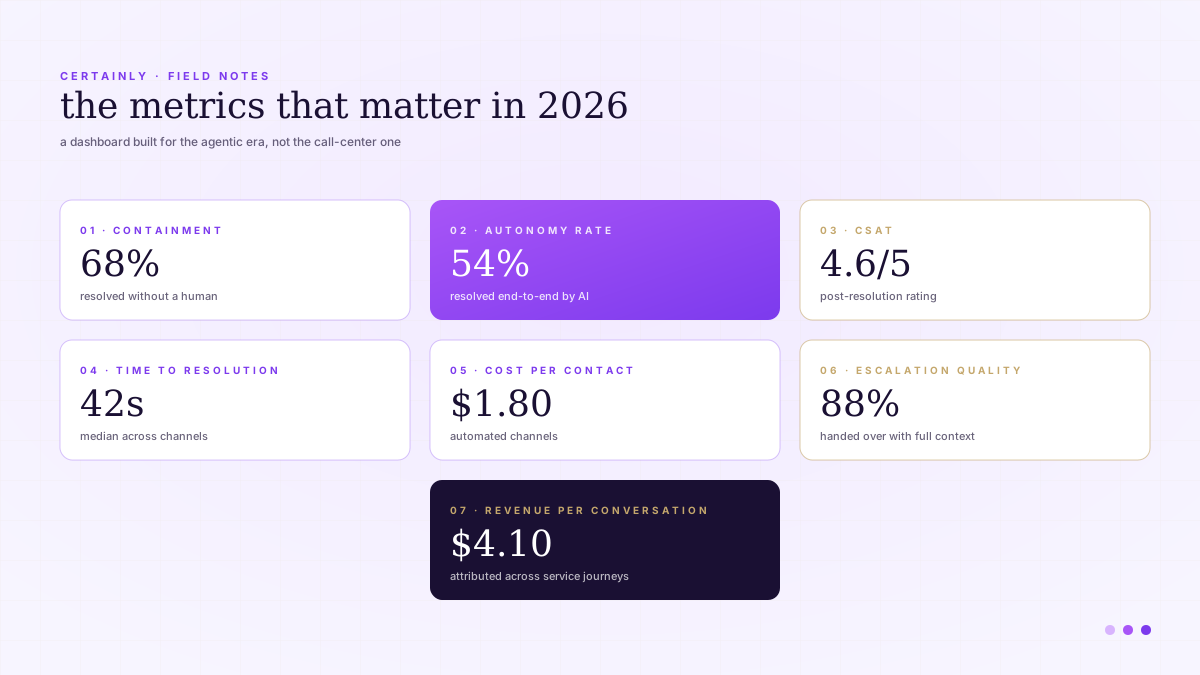
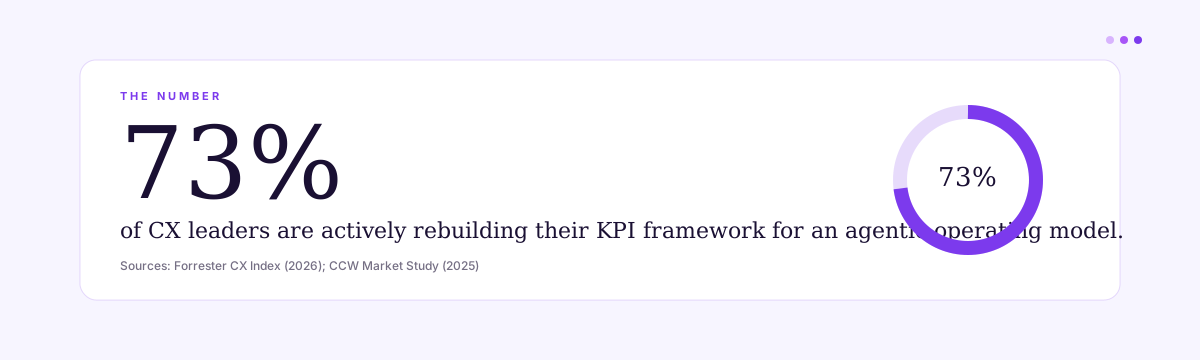
Most CX dashboards in production today were designed to measure a workforce that no longer exists. Average handle time, tickets per agent per day, generic NPS, and self-service deflection rates were the right answers for a labour-intensive contact center. They are the wrong answers for an agentic operating model. Forrester's 2026 CX Index finds 73% of CX leaders are actively rebuilding their KPI framework. The seven metrics that should replace the old ones are containment, autonomy rate, CSAT, time to resolution, cost per contact, escalation quality, and revenue per conversation. Track those, retire the rest, and the dashboard finally tells the truth.
There is a strange continuity in CX measurement. Dashboards built in 2008 are still tracking the same metrics in 2026, even though almost everything underneath them has changed. Average handle time, in particular, has the kind of stubborn longevity usually reserved for printer drivers and fax machines.
It is not that the old metrics were ever wrong. They were precisely calibrated to a world where the entire job was done by humans, the cost lever was headcount, and the quality lever was script adherence. That world is gone. The dashboard noticed last.
Why the Old Metrics Mislead Now
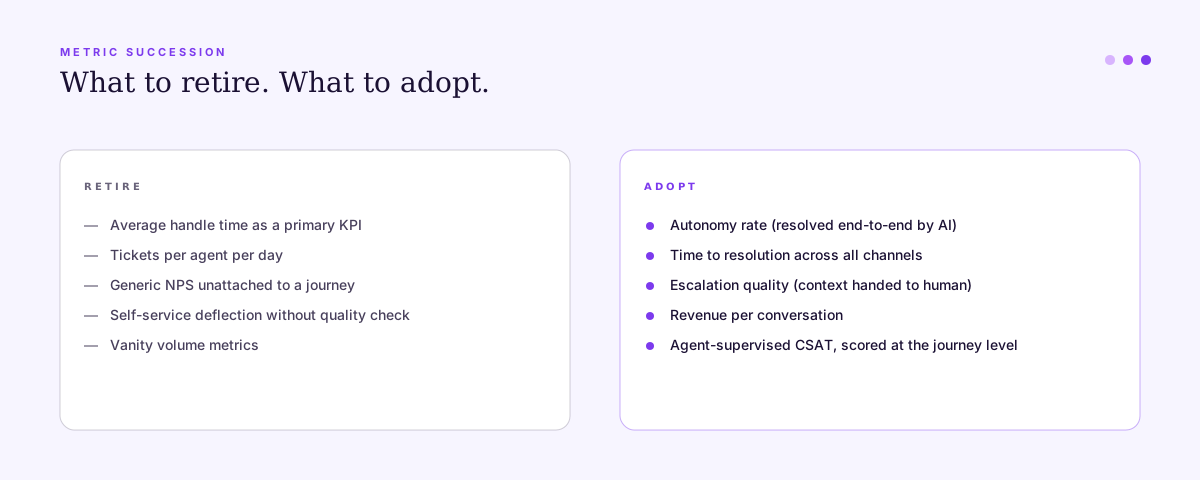
Average handle time, as a primary KPI, used to be a useful proxy for cost. Now it actively misleads. An AI agent that resolves a refund in 14 seconds and an AI agent that hallucinates a refund in 14 seconds have identical AHT. Tickets per agent per day rewards working through the queue, even when the right move is to spend an hour on a single high-value retention case.
Generic NPS without journey context tells you the customer is upset somewhere, which is the same information the customer's last email already told you. Self-service deflection rate without quality measurement rewards sending the customer away, regardless of whether they came back angrier the next day.
These metrics are not bad. They are answering a question the business stopped asking.
The Seven Metrics That Belong on a 2026 Dashboard
Containment. The percentage of inbound contacts resolved without ever reaching a human, at acceptable quality. Distinct from deflection because it measures resolution, not avoidance.
Autonomy rate. The percentage of contacts resolved end-to-end by AI, including any system actions taken (refund issued, order changed, account updated). This is the new throughput metric.
CSAT, scored at the journey level. Not a transactional thumbs up. A measurement of how the customer felt across the full sequence of interactions, including any handoffs.
Time to resolution. Median time from first contact to confirmed resolution, across channels. Replaces average handle time as the new speed KPI because it includes everything that used to happen between the call and the actual fix.
Cost per contact. Disaggregated by channel and by automation tier. Should drop 60-80% on automated channels in a healthy agentic operation, while staying stable or rising slightly on the high-value cases the human team handles.
Escalation quality. When the AI hands a case to a human, how complete is the context? Full transcript, identified customer, attempted actions, confidence score, recommended next step. Anything less is the AI throwing the case over a wall.
Revenue per conversation. Attributed across service journeys that touched commerce systems. The metric that lets the contact center claim its seat at the revenue table.
What to Quietly Retire
Five metrics deserve a graceful exit from the dashboard.
Average handle time as a primary KPI. It made sense when humans did all the work. It actively distorts decisions when AI does most of it.
Tickets per agent per day. A volume metric that rewards working through the queue rather than working on the right cases.
Generic NPS unattached to a journey. The data is too thin to act on and too easy to misinterpret.
Self-service deflection without quality measurement. Without a quality check, this rewards sending the customer away from a resolution rather than to one.
Vanity volume metrics (chats handled, calls answered) that count activity instead of outcomes. The dashboard does not need to celebrate that something happened. It needs to show whether the right thing happened.
AI Readiness Score
How ready is your team for AI?
6 quick questions. Get a personalised score and action plan.
Try the AI Readiness Score1000+ agents deployed worldwide · 4.8 on G2
What CX Leaders Should Do Now
Replatforming the dashboard is unglamorous work. Three priorities.
Run the new and old metrics in parallel for one quarter. Show the team and the executive sponsors how the new metrics tell a different story. The contrast is the argument.
Tie each new metric to a business outcome explicitly. Containment to operational cost. Autonomy rate to scale. Escalation quality to CSAT. Revenue per conversation to the P&L. The business case writes itself when each metric has an owner outside the contact center.
Sunset the legacy metrics with a date. Decisions stay anchored to the old metrics until you formally turn them off. Pick a quarter, pick a date, and retire them.
The dashboard is the part of the operation that decides what gets attention. Update it, and the rest of the function follows. Leave it alone, and you optimise for a world the rest of the business has already moved on from.