TL;DR
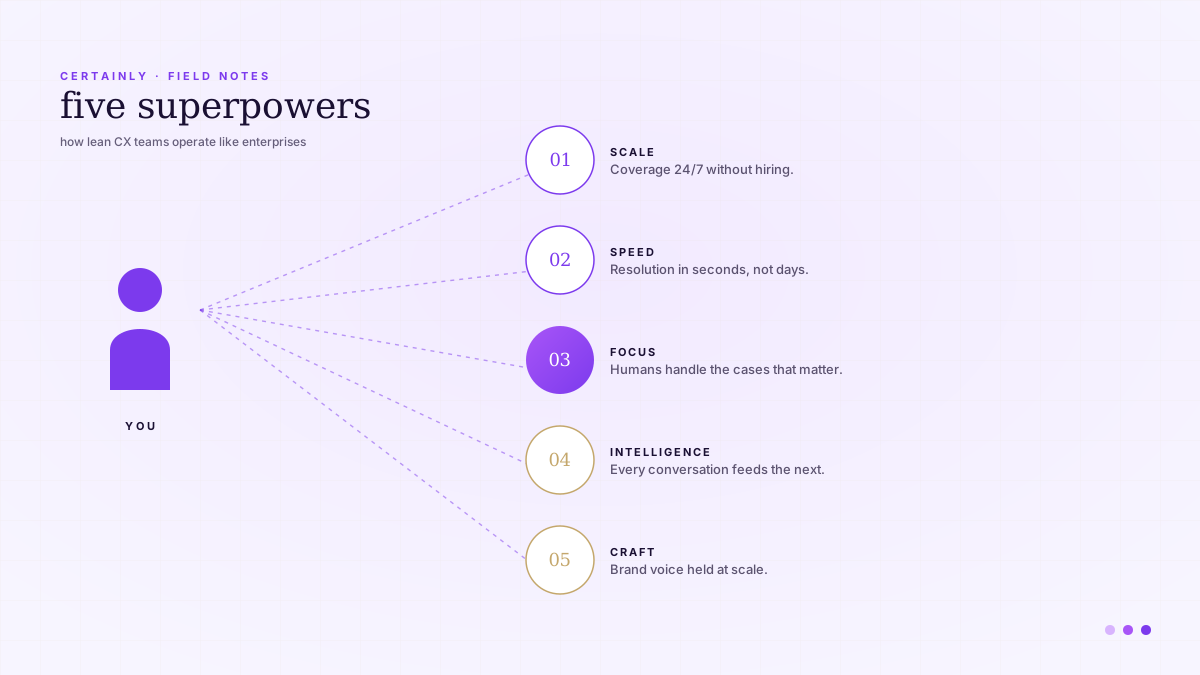
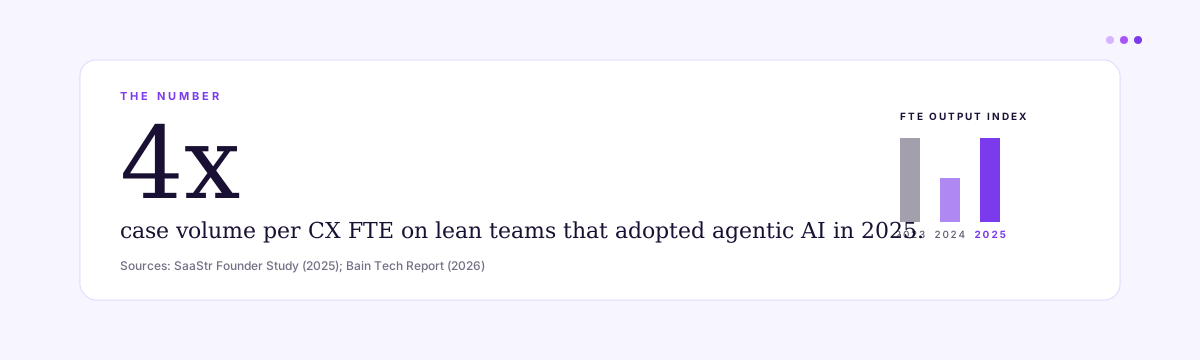
Lean CX teams used to be defined by what they could not do: round-the-clock coverage, sub-minute response times, journey-level personalisation, deep analytics. Agentic AI has flipped the table. The same five-person team that struggled with email volume two years ago now runs an operation indistinguishable from a 50-person one. Five superpowers do most of the work: scale (24/7 coverage without hiring), speed (resolution in seconds), focus (humans on the cases that matter), intelligence (every conversation feeds the next), and craft (brand voice held at scale). Recent Bain analysis puts the productivity gain at 4x case volume per FTE for lean teams that adopted agentic AI in 2025.
Lean teams have always been romantic on the front of a deck and brutal in the trenches. The same team that gets praised for its scrappiness in a board meeting is the one missing tickets at 11pm on a Sunday because there is no rota for that.
What changed in the last eighteen months is not that small teams got bigger. It is that the work each member of the team can credibly claim got dramatically larger. The best operators in CX today are running enterprise-scale operations from desks that used to be considered too small for the job.
Superpower 1: Coverage Without Hiring
The first thing that breaks on a lean team is not quality. It is coverage. The hours nobody is awake, the languages nobody on the team speaks, the channels nobody has bandwidth to monitor.
Agentic AI takes those off the org chart. A correctly deployed AI agent covers 24/7, in any supported language, on every channel the brand uses. The lean team is no longer choosing between sleep and a Tier-1 ticket queue at 3am.
Superpower 2: Resolution in Seconds, Not Days
Lean teams used to lose on response time because there was always a queue. The customer who emailed Tuesday morning got a thoughtful reply Wednesday afternoon. By 2026 standards, that timeline is the customer service equivalent of writing back via the postal service.
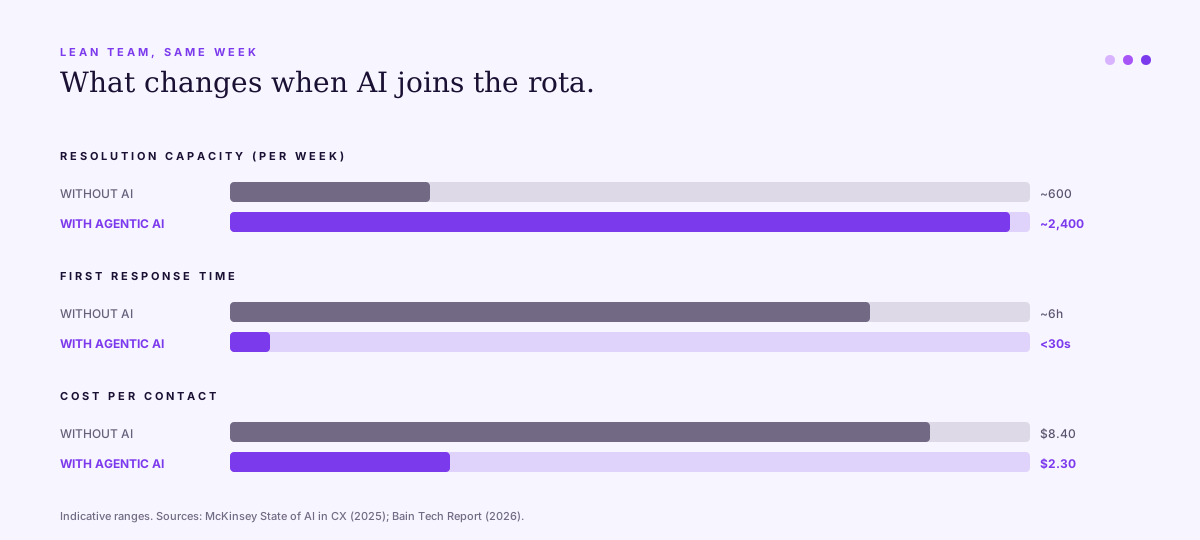
Median first response time on agentic teams now sits under 30 seconds. More importantly, the time to actual resolution (not just acknowledgement) is under five minutes for the majority of tier-one cases. The lean team punches at the response speed of a much larger one because most of the responses are not coming from the team at all.
Superpower 3: Humans on the Cases That Actually Matter
On most lean teams, the senior operator is also the person manually closing password-reset tickets at 9am. That is a specific kind of misery, and a complete waste of the team's most expensive thinking.
Agentic AI handles the long tail of routine work, which means the human team works exclusively on the cases that move retention, revenue, or risk. The job description for a CX hire on a lean team has shifted from generalist firefighter to escalation specialist. The work is harder, but it is the right work.
AI Readiness Score
How ready is your team for AI?
6 quick questions. Get a personalised score and action plan.
Try the AI Readiness Score1000+ agents deployed worldwide · 4.8 on G2
Superpower 4: Every Conversation Feeds the Next
Lean teams used to lose on analytics because there was no one to analyse. The customer feedback in the inbox stayed in the inbox.
An agentic operating model treats every conversation as data: intent, sentiment, escalation reason, resolution path, customer outcome. The system is improving itself in the background. The Tuesday standup has facts in it that a 50-person team would have needed a dedicated analyst to produce.
Superpower 5: Brand Voice Held at Scale
The hardest thing for a small team to do as it scales used to be hold its voice. Personality drifts when new people join, when volume spikes, when shortcuts are taken on a bad day.
Agentic AI is now a more reliable carrier of brand voice than the human team it works alongside. Tone, vocabulary, restrictions, and brand-safe language are encoded once and applied consistently. The Sunday evening reply has the same craft as the Monday morning one.
The Numbers That Make the Case
Bain's 2026 Tech Report finds lean CX teams using agentic AI handle 4x the case volume per FTE compared to lean teams without it, with no degradation in CSAT and a measurable improvement in escalation quality. Y Combinator's 2025 operations survey reported similar gains across portfolio companies under 30 employees.
What CX Leaders on Lean Teams Should Do Now
Three priorities, in order.
Deploy AI on the most painful queue first. Not the most complex. The one that drains the team's energy most. The morale return alone justifies the investment.
Restructure the team around oversight, not output. The senior operators stop closing tickets and start supervising the system. Promote into the supervisor role explicitly so the team understands the change.
Run the brand voice as code. Encode the tone, the restrictions, and the escalation rules. The brand is now an artefact the system reads, not a tribal knowledge held by the original founder.
Lean teams used to lose on the metrics that mattered to enterprise buyers. In 2026, they are competing on those same metrics, and often winning. The five superpowers above are why.