TL;DR
Everyone has had the bad chatbot experience. The fear of repeating it is rational and addressable. The three things that separate a great deployment from a terrible one are real knowledge grounding, fast clean handoff to humans, and a modern conversational engine. Brands that get this right do not lose the personal touch; they relocate it to the conversations that deserve it.
Why the Terrible Bot Memory Is So Vivid
The 2017–2022 chatbot era left a generation of customers (and CX leaders) with a specific muscle memory: scripted decision trees, intent classifiers that broke on synonyms, no handoff to humans, and the dreaded 'I did not understand that, please try again' loop. The fear that this will repeat is rational. The technology has changed; the brand damage from the previous wave has not yet faded.
The good news: the architecture that produced those experiences is obsolete. The bad news: many vendors are still selling it under new branding. Knowing the difference is the entire purchase decision.
What Actually Causes Bad Bot Experiences
Five recurring causes, in rough order of frequency:
- 1.No knowledge grounding. The bot guesses or makes up policy. Customers catch it and trust collapses.
- 1.No handoff to humans. Or the handoff loses context and the human arrives blind. Customer repeats themselves; CSAT drops.
- 1.Single-turn memory. Every turn restarts the context. Conversation never gets anywhere.
- 1.Rule-based intent matching. Customer has to guess the magic words. They give up.
- 1.Wrong scope. The bot is asked to handle conversations it has no chance of resolving (complex claims, vulnerable customer outreach, complaints).
Each is addressable. None is solved by switching LLM provider; each requires a platform choice and a deployment discipline.
How Modern AI Handles Natural Dialogue
Three mechanisms older bots lacked.
Multi-turn memory. The agent holds the customer's stated context, mid-conversation changes of mind, and previous turns. No restart loops.
Intent understanding in any phrasing. The customer does not have to guess the magic words. 'I want to return this' and 'this does not fit, can I send it back?' route to the same workflow.
Tone-matching grounded in brand voice. The agent does not sound like a generic Silicon Valley assistant. Voice, register and idiom can be tuned to fit the brand.
The deeper architectural difference is covered in our agentic AI vs chatbots guide. The short version: rule-based was a flowchart; modern AI is an agent.
AI Readiness Score
How ready is your team for AI?
6 quick questions. Get a personalised score and action plan.
Try the AI Readiness Score1000+ agents deployed worldwide · 4.8 on G2
How to Preserve the Human Touch
Three patterns that consistently work.
AI handles the predictable, humans handle the meaningful. Order status, document requests, routine policy questions, simple FAQs to the AI. Complaints, emotional conversations, high-value customers, vulnerability indicators to humans. The AI's job is to identify the difference quickly.
Sentiment-triggered handoff. The agent detects frustration, distress or complexity and hands off proactively, not reactively. The customer does not have to escalate; the agent escalates for them.
Context-preserving handoff. When the human arrives, they have the full conversation, a structured summary, the customer's emotional state, and a recommended next step. The customer never has to repeat themselves.
Done well, this increases personal touch on the conversations that need it because human agents spend less time on the repetitive ones. Our AI agent vs live chat guide walks through the routing patterns.
What to Demand From a Vendor
A live demo of: (1) knowledge grounding with citations against your real knowledge base, (2) a mid-conversation handoff with the human arriving in a thread containing the full context, (3) a multi-turn conversation where the customer changes their mind without restarting the bot. If a vendor cannot demonstrate all three live, the deployment will reproduce the experiences you are trying to avoid.
What to Measure After Launch
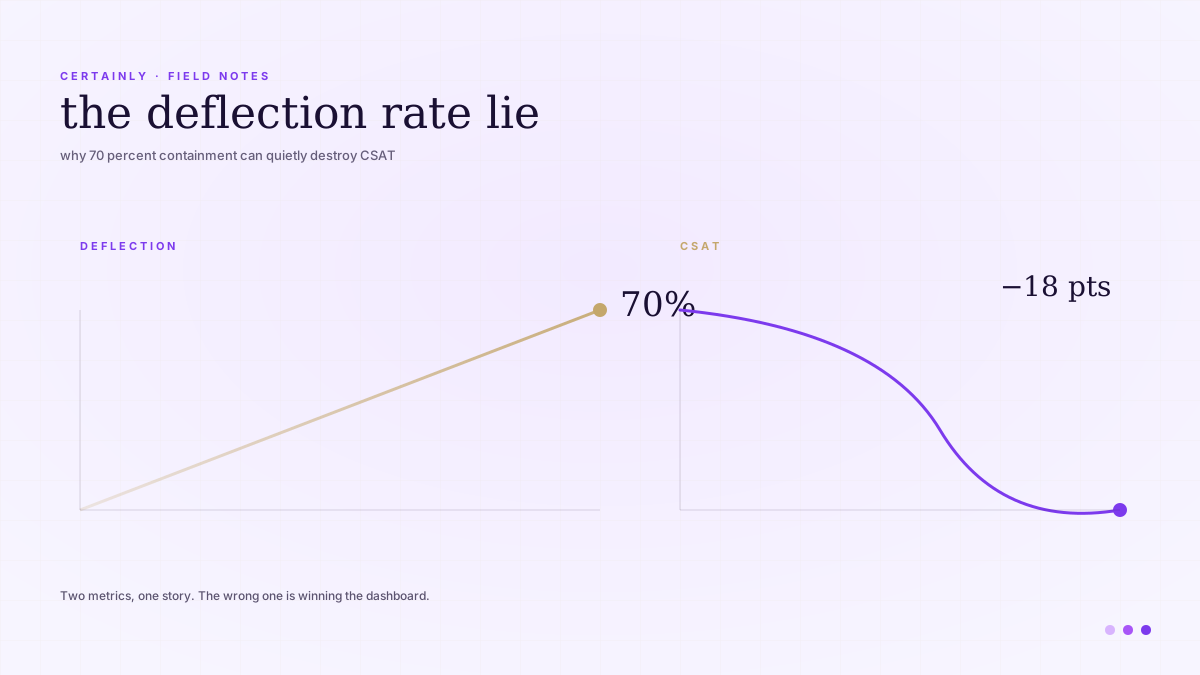
CSAT delta on AI vs human-handled conversations. Repeat-contact rate within seven days. Handoff time in seconds. Customer-initiated escalations to human as a share of total. The first two are the trust metrics; the last two are the operational ones. All four should be visible on a single weekly dashboard.
Next Step
If you want to see what natural dialogue and clean handoff look like in a live agent on your own knowledge base, book a working session. We will run your hardest tickets through the agent, show you the handoff in action and demonstrate the audit log. The fear of repeating the bad chatbot experience is the easiest one to disprove in twenty minutes.