TL;DR
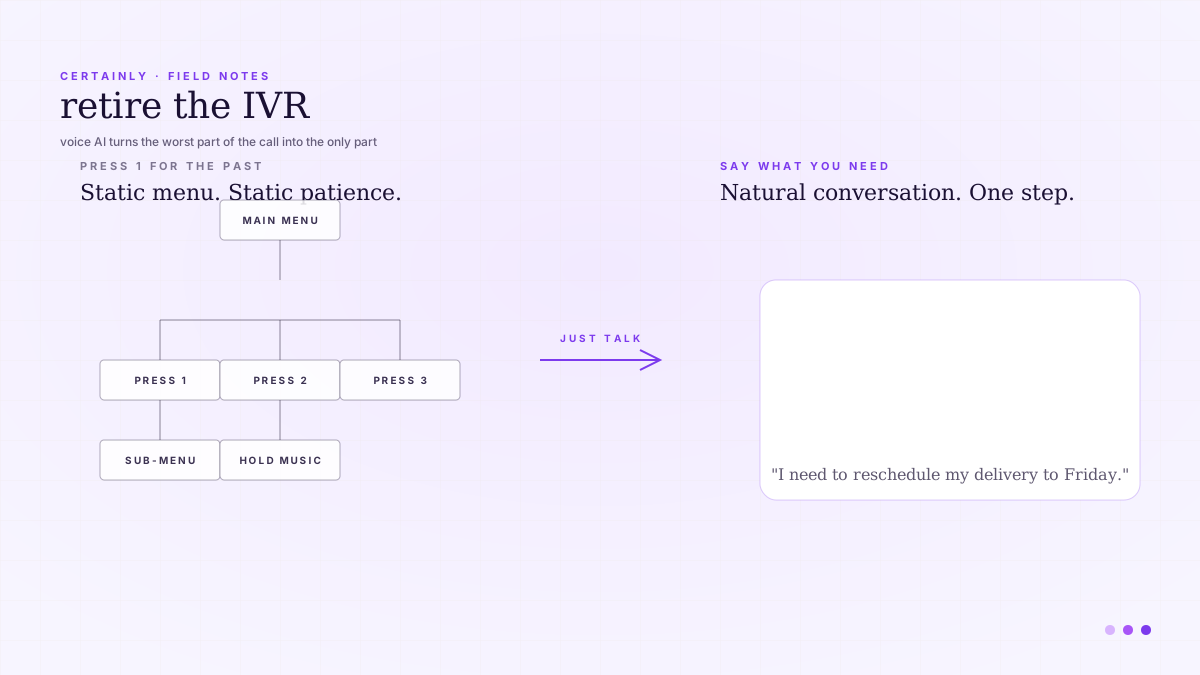
The Interactive Voice Response menu was never a customer experience. It was a queue that learned to talk. Voice AI replaces it with a single natural conversation that captures intent, retrieves the answer, executes the action, and confirms the result on the same call. Recent benchmarks put the impact at a 38% reduction in average handle time for tier-one calls and a measurable lift in CSAT, even on the calls that still require a human. The shift is not about voice quality anymore. It is about retiring the architecture that made every call feel like a maze.
The IVR has had a long career. Three decades of pressing 1, then 2, then 0, then 0 again until something happens. It survived because it was the only economical way to triage a high volume of calls. Customers tolerated it the way you tolerate a bad commute: as a known cost of getting where you actually want to go.
That tolerance has run out. The same customer who has voice-controlled their thermostat, ordered a car with two words, and asked an AI to write a resignation letter is no longer impressed by a menu that asks them to spell their last name with their phone keypad.
Why the IVR Was Always a Workaround
An IVR is a flowchart wearing a microphone. It assumes the customer knows which category their problem belongs to, that the categories you wrote down five years ago still match reality, and that they will not change their mind halfway through.
None of those assumptions hold. The customer who pressed 2 for billing actually has a delivery question. The customer who pressed 0 for an agent did so because option 4 sounded close but not quite right. The customer who navigated successfully to the right team is now reading their account number to a human who could have looked it up themselves.
Every one of those moments is a tax on resolution time, a hit to CSAT, and a contributor to the per-call cost line on a P&L that nobody is happy with. The IVR was the best workaround available in 1998. It has been a workaround ever since.
What a Voice AI Call Actually Looks Like
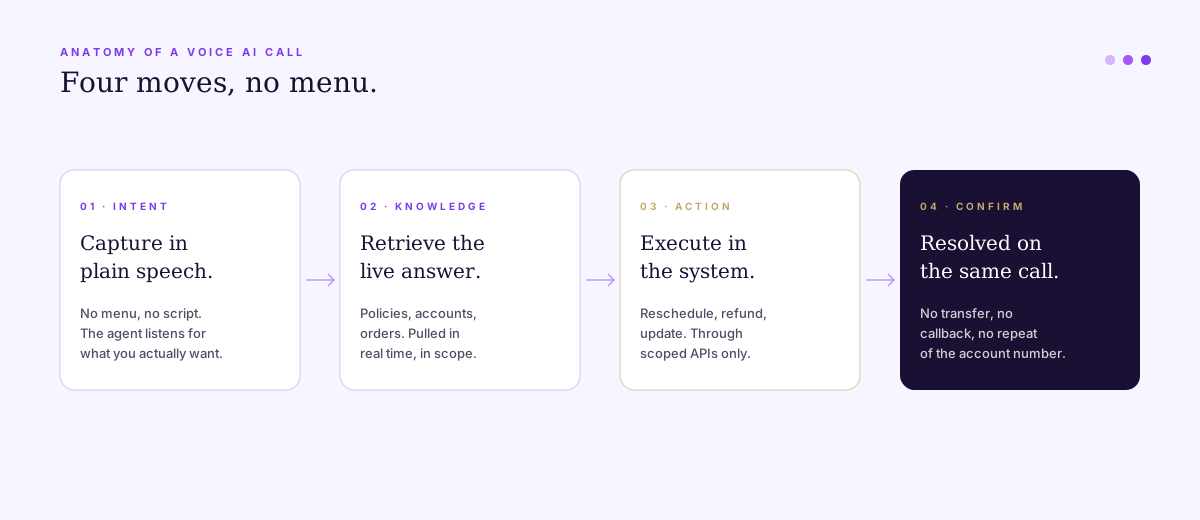
A voice AI replacement collapses the call into four moves. None of them require the customer to know your org chart.
Intent capture. The customer says, in their own words, why they called. The agent recognises the intent immediately, including the variants that an IVR menu would have routed to the wrong queue.
Knowledge retrieval. The agent pulls the live, in-scope answer: policy, account record, order status, eligibility. Not a static FAQ from 2021. The current truth, drawn through scoped APIs.
System action. The agent executes the change in the system of record: reschedule, refund, update, escalate. Through proper credentials, with audit logging, with a circuit breaker if something looks off.
Confirmation. The customer hears what happened, in plain language, and the call ends. No transfer. No callback promise that may or may not arrive. No request to repeat the account number to a third person.
The Numbers That Make the Case
Voice AI replacement is no longer a hopeful pilot. The benchmarks have settled.
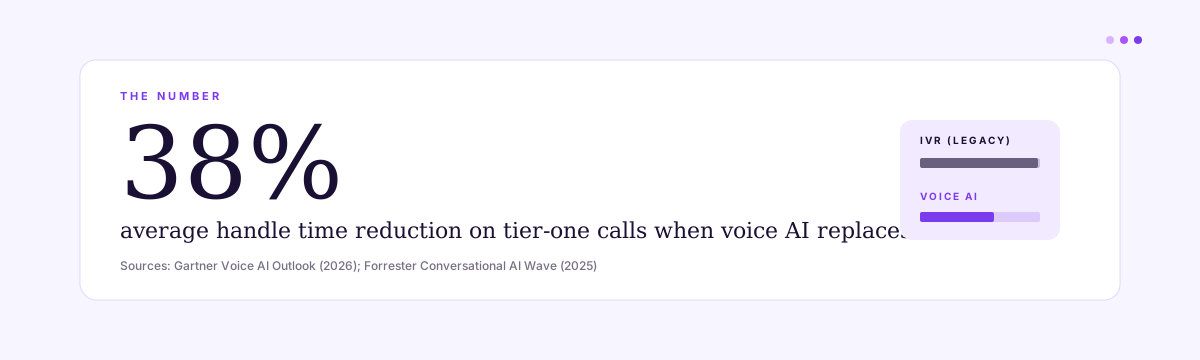
Gartner's 2026 voice AI outlook puts the average handle time reduction at 38% for tier-one calls (billing, scheduling, account changes, basic policy questions). Metrigy's 2026 MetriCast finds CSAT for voice AI calls is now within two points of human-handled equivalents on routine work, and ahead of human handling on calls that previously involved a transfer.
Forrester's most recent Wave on conversational AI notes that voice AI deployments crossed the 50% containment threshold in production for the first time in 2025. Half of all calls reaching the agent get resolved without a human, at quality levels that did not exist eighteen months ago.
AI Readiness Score
How ready is your team for AI?
6 quick questions. Get a personalised score and action plan.
Try the AI Readiness Score1000+ agents deployed worldwide · 4.8 on G2
What CX Leaders Should Do Now
Voice AI is the rare technology where the case is made and the deployment is the harder part. Three priorities.
Pick the call types where the IVR fails worst. The biggest wins are not in the most complex calls. They are in the calls where customers most often press 0 to escape the menu. Map those, and target voice AI at them first.
Connect to systems of record on day one. A voice AI that can only answer questions is half a product. The lift comes from agents that can actually do something: reschedule, refund, update. Skip this and you have built a more polite IVR.
Set the human handover bar high. Define exactly what a clean escalation looks like: full transcript, identified customer, attempted actions, confidence score. The escalation experience is now the differentiator, not whether AI handled the first part.
The IVR was a workaround we lived with for too long. Voice AI is the first technology that lets customers say what they want and get it. It is not a feature. It is the new floor.