TL;DR
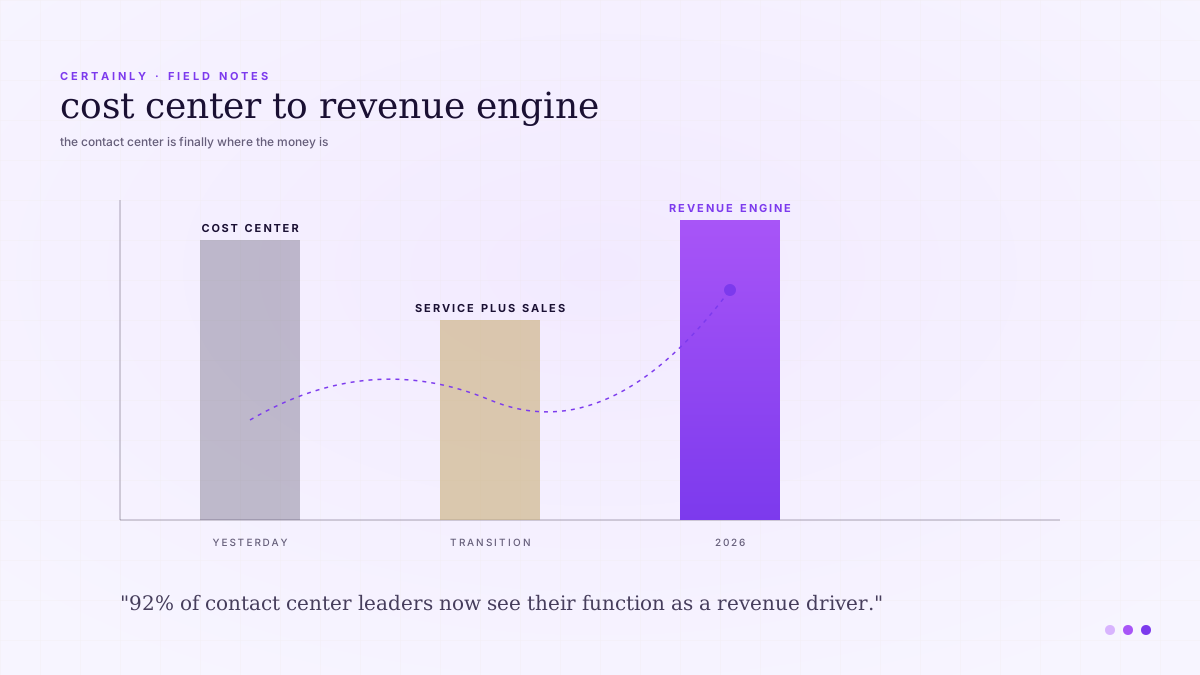
For thirty years the contact center has been a line item to be reduced. In 2026, 92% of contact center leaders now report against revenue targets, not just cost-to-serve. Three shifts are driving the change: agentic deflection finally working at production quality, service journeys becoming commerce journeys, and human agents moving from frontline handlers to supervisors of an AI workforce. The leaders treating service as a growth function are seeing 14% revenue lift attributable to service-led commerce, while their cost-per-contact drops in parallel. The two are no longer trade-offs.
The cost-center label has been the limiting story for CX leaders for as long as anyone in the industry can remember. The brief was simple and largely depressing: handle the volume, control the headcount, defend the budget. Quality was a constraint, not a goal. Revenue was somebody else's KPI.
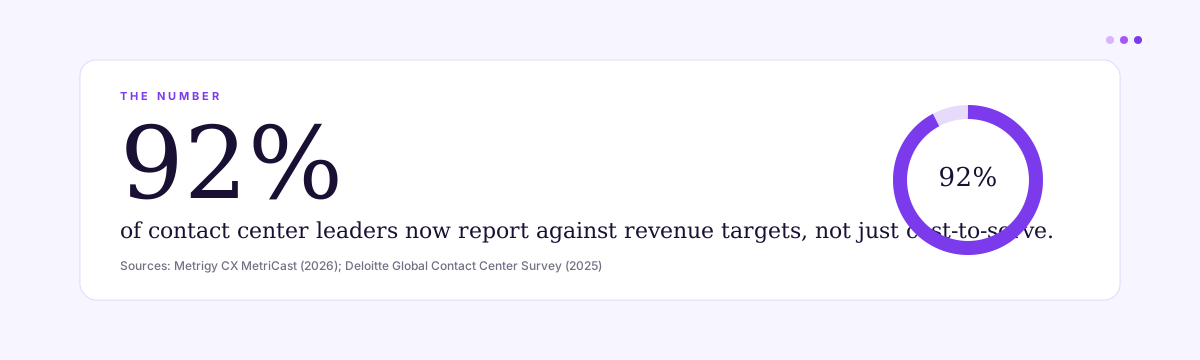
That story is being rewritten in real time. Recent Metrigy data shows 92% of contact center leaders now report directly against revenue targets, alongside the traditional cost and quality metrics. The change is not aspirational. It is on the org charts.
Three Shifts That Forced the Reinvention
The repositioning is not happening because someone wrote a strategy deck. It is happening because three operational shifts have stacked up at once.
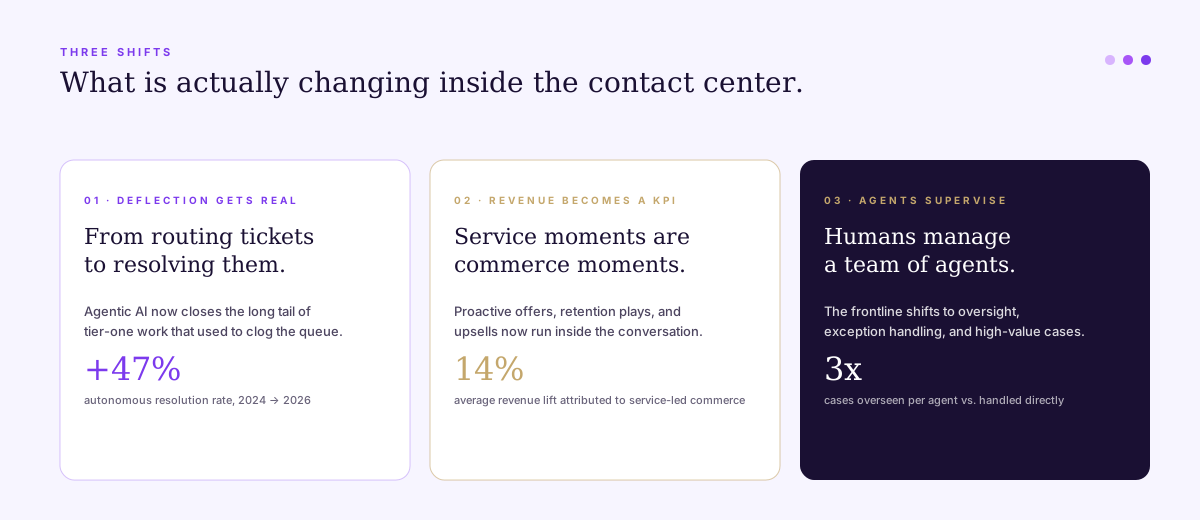
Agentic deflection finally works. For years, deflection was a euphemism for sending customers to a knowledge base they would never read. In 2026, agentic AI resolves the long tail of tier-one work end to end. Autonomous resolution rates have climbed from a quoted average of 18% in 2024 to 47% by early 2026. That is the difference between a deflection theatre and an actual operating model change.
Service moments became commerce moments. Once an AI agent can hold the customer record, the order history, and the live policy in working memory, the line between resolving and selling disappears. Proactive offers, retention plays, and upsells now run inside service conversations. Bain attributes 14% of revenue lift in early-adopter enterprises to commerce running on service infrastructure.
Human agents became supervisors. The frontline role has changed shape. The best human agents now oversee three to five AI workers in parallel: reviewing exceptions, resolving the cases the AI flagged, and improving the playbooks the agents run on. The job description has shifted from doing the work to managing the workforce that does the work.
What This Looks Like in Practice
A logistics retailer running a unified platform sees a delivery exception flagged by the OMS. An agentic system messages the customer proactively, offers a reschedule, applies a discount on the next order, and logs the conversation as both a service interaction and a retention touchpoint. The conversation lasts under a minute. Cost-per-contact drops, retention nudges up, and the human team is freed to handle the high-value escalations that did require human judgement.
Two years ago, that same exception would have been discovered when the customer called to complain. The IVR would have routed them to billing. Billing would have transferred them to logistics. Logistics would have offered an apology and the same reschedule, twenty minutes later, at significantly higher cost.
Why the Boardroom Cares Now
CFOs treated the contact center as a fixed cost for decades because it was. Headcount scaled linearly with volume. Quality improvements cost money. Revenue contributions were anecdotal at best.
Agentic AI broke that linearity. Variable cost per contact has dropped 60-70% on automated channels. Headcount no longer scales with volume. And revenue attribution from service journeys is finally measurable through unified platforms that own the conversation across channels. The CFO is now in the room because the contact center has graduated from a cost line to a P&L contributor.
AI Readiness Score
How ready is your team for AI?
6 quick questions. Get a personalised score and action plan.
Try the AI Readiness Score1000+ agents deployed worldwide · 4.8 on G2
What CX Leaders Should Do Now
The reinvention is real, but it does not happen automatically. Three priorities to drive it.
Add revenue per conversation to your dashboard. If you are not measuring it, you are not capturing it. Start with attribution on service journeys that touched commerce systems and expand from there.
Restructure the human team around supervision, not handling. Hire and train for oversight skills: exception judgement, AI quality review, playbook iteration. The frontline is becoming a smaller, higher-leverage function.
Brief the CFO before they brief you. The economics of the contact center have changed. Walk the CFO through the new operating model and the new metrics before they form their own view from old data.
Cost-center thinking optimised for the world the contact center used to live in. The new world rewards treating service as a growth engine. The leaders who reposition their function first will own the conversation in their boardroom.