TL;DR
Agentic AI is not a better chatbot. It is a fundamentally different category of technology that perceives context, reasons toward goals, takes action across systems, and learns from outcomes. The shift from conversational AI to agentic AI is the shift from a system that talks to one that acts. For CX leaders, this means faster resolution, lower costs, and proactive customer engagement, but it also requires clear governance, transparent AI disclosure, and robust escalation design.
Most senior leaders have now encountered the term 'agentic AI.' Far fewer can say with confidence what it actually does, and what separates it from every AI investment that came before it.
That distinction matters enormously. Because agentic AI is not a better chatbot. It is a different category of technology entirely, and treating it as an incremental upgrade will cause you to significantly underestimate both its potential and its risks.
The Evolution: From Chatbots to Agents
To understand agentic AI, it helps to understand what came before it. Rule-based chatbots follow fixed scripts and answer predefined questions. Conversational AI (GenAI) generates natural language and holds fluid conversations. Agentic AI perceives context, reasons about a goal, takes action across systems, and learns from outcomes.
The shift from conversational AI to agentic AI is the shift from a system that talks to one that acts. A conversational AI tool will tell a customer how to request a refund. An AI agent will process the refund.
The Four Defining Traits of an AI Agent
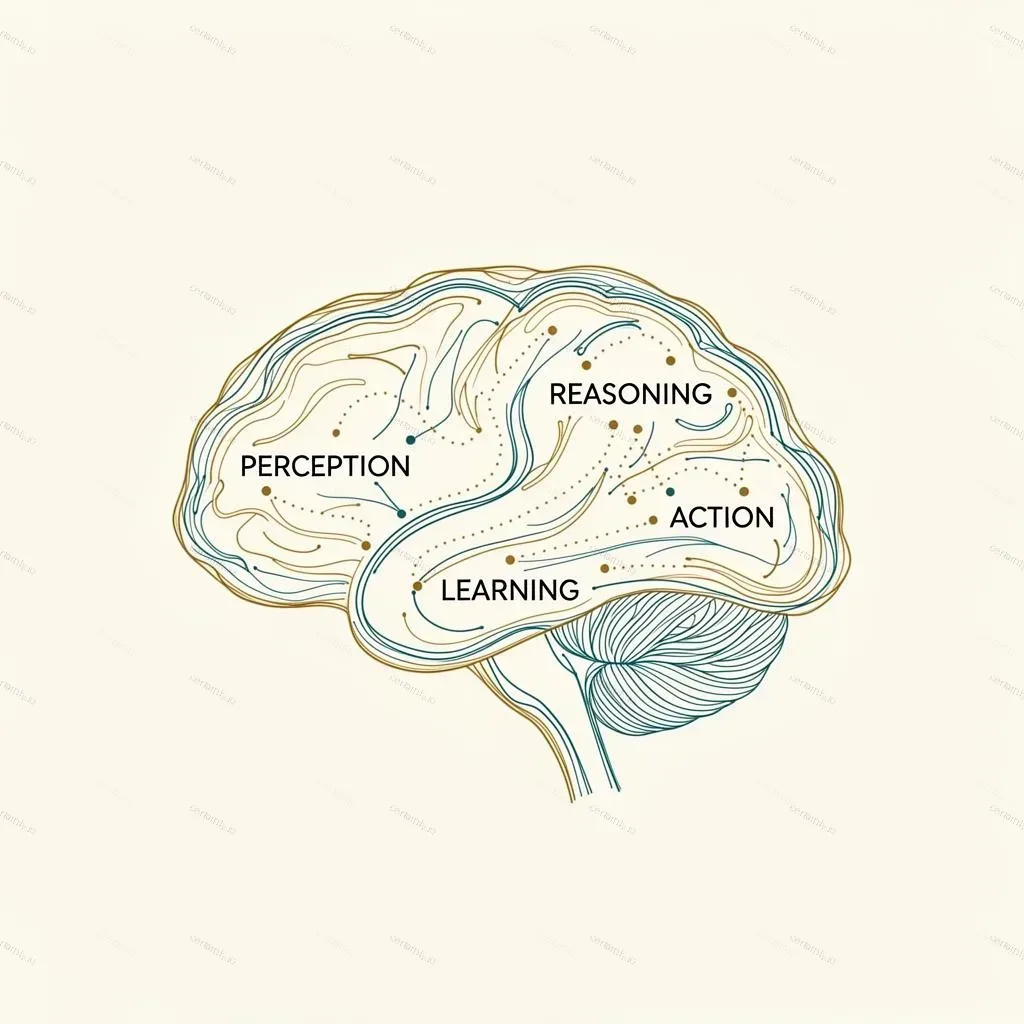
Anthropic's research on agent design and work from Google DeepMind converge on four core capabilities that define a true AI agent.
Perception: The agent takes in context from multiple sources simultaneously, including conversation history, CRM data, account status, live system signals, and sentiment signals. It builds a situational picture rather than responding to a single input.
Reasoning: The agent applies judgment to that context. It identifies what the customer needs, what actions are available, what constraints exist, and what the best path to resolution is. This is not retrieval. It is inference.
Action: The agent executes. It can call APIs, update records, trigger workflows, send communications, escalate to humans, or coordinate with other agents. It does not just recommend. It does.
Learning: The agent improves. Each interaction generates signal: what worked, what failed, what required human correction. Over time, the agent's performance compounds. This is the capability that creates the long-term competitive moat for organisations that deploy early.
Why 'Agentic' Changes the CX Equation
Traditional CX technology was fundamentally reactive. A customer contacts the business. The system responds. The interaction closes. Agentic AI inverts this model.
Gartner describes agentic AI as enabling 'autonomous and low-effort customer experiences,' meaning systems that proactively resolve service requests on behalf of customers rather than waiting to be asked.
An agent monitoring a delivery system does not wait for a customer to call about a delay. It detects the problem, assesses the severity, and initiates a resolution before the customer is aware there is an issue to raise.
AI Readiness Score
How ready is your team for AI?
6 quick questions. Get a personalised score and action plan.
Try the AI Readiness Score1000+ agents deployed worldwide · 4.8 on G2
The Trust Question
Adobe's 2026 AI and Digital Trends research surfaces a critical finding: while organisations are racing toward agentic CX, customers remain cautious. The single most important trust factor customers cite is the ability to switch to a human at any time.
For leaders, this is not a reason to slow down. It is a design requirement. Transparency about AI involvement, clear escalation paths, and genuine human availability are not optional features. They are the foundations of agentic CX that customers will actually trust.
Five Questions Every Executive Should Ask Before Buying
Before committing to a vendor or platform, ensure your team can answer these with confidence: What systems will the agent need to access? How does the agent escalate, and what context does the human receive? How does the platform handle errors and hallucinations? What does the learning loop look like? How do we measure success, and what does the vendor commit to?
What to Do Now
McKinsey's 2025 research shows that 23% of organisations are currently scaling agentic AI, and 39% are in early experimentation. The early-mover window has not yet closed, but it is narrowing. The starting point is not a technology decision. It is a use-case decision. Identify the two or three customer journeys where autonomous resolution would deliver the most value. Start there. Measure rigorously. Scale what works.